
Stability and Routine for Memory Challenges
Memory Support Care in Arlington for older adults living with dementia or Alzheimer's who need secure supervision and structured daily activities
Grandmother's House provides memory support care in a residential setting designed for individuals whose cognitive decline makes independent living unsafe or overwhelming. You or your loved one receive supervision in a secure environment where doors are monitored, routines are consistent, and caregivers are trained to manage confusion, wandering, and behavioral changes that often accompany dementia or Alzheimer's disease. This service is intended for Arlington families who are facing the reality that memory loss has progressed beyond what can be managed at home, and who need a calm, predictable atmosphere that reduces anxiety and supports remaining abilities.
Daily life is structured around repetition and familiarity. Meals are served at the same time each day, caregivers use simple language and visual cues, and activities are designed to engage without frustrating. Residents participate in light tasks such as folding towels, sorting objects, or listening to music, all of which provide sensory input and a sense of purpose without requiring complex decision-making. The physical layout is easy to navigate, with clear sight lines, labeled rooms, and minimal clutter that might cause disorientation. Arlington's access to specialized dementia care training and local support groups for families allows Grandmother's House to stay current with care techniques and connect families to additional resources.
If you are searching for memory care in Arlington that feels more like a home than a locked unit, reach out to discuss how daily routines are structured and what behavioral support looks like in practice.
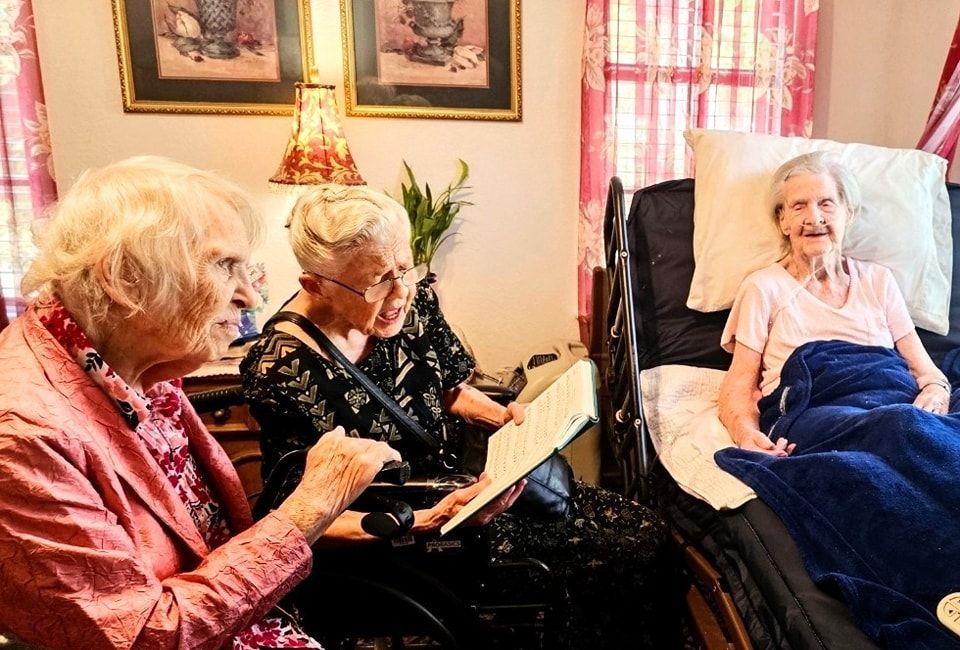
What Structured Memory Care Provides Each Day
You enter a setting where caregivers understand that repeated questions, resistance to bathing, or nighttime restlessness are symptoms of the disease rather than defiance. Staff respond with redirection, reassurance, and patience, and they use techniques such as hand-over-hand assistance, calming music, and simple prompts to guide residents through daily tasks. Personalized care plans account for each resident's history, preferences, and triggers, and staff adjust their approach based on what works for that individual.
After a resident settles into memory care, family members often notice a reduction in agitation and confusion because the environment no longer demands decision-making or problem-solving that the person can no longer manage. Grandmother's House caregivers help with dressing, toileting, and meals without rushing, and they monitor for signs of illness or pain that residents may not be able to communicate clearly. The secure setting prevents wandering outside the home, and caregivers are trained to respond calmly when residents attempt to leave or become distressed.
This level of care works best for residents in the moderate to advanced stages of dementia who can still participate in group activities with prompting but cannot be left alone safely. Staff do not provide locked units or elopement alarms on individual residents, but the home is designed to prevent unsupervised exits. Families receive regular updates on mood, eating habits, sleep patterns, and any behavioral changes, and care plans are adjusted as cognitive decline progresses.
Common Questions About Memory Support in a Residential Setting
Memory care decisions are difficult, and families want to understand how staff manage the unpredictable behaviors and communication challenges that come with dementia.
What does a secure and supervised environment mean in a care home?
All exits are monitored, and caregivers know where each resident is throughout the day. Residents can move freely within the home, but they cannot leave unaccompanied, and outdoor spaces are enclosed and supervised.
How do caregivers handle confusion or agitation?
Staff use redirection, calm voices, and familiar routines to reduce distress. If a resident becomes upset, caregivers remove them from the triggering situation, offer reassurance, and engage them in a simple, soothing activity such as folding laundry or listening to music.
Why is routine so important for memory care?
People with dementia rely on repetition to make sense of their environment. Consistent meal times, familiar faces, and predictable daily activities reduce anxiety and help residents feel safe even when they cannot remember recent events.
How does Grandmother's House communicate with families in Arlington?
You receive regular phone updates, and you are welcome to visit during the day. Staff share observations about mood, eating, sleep, and any health concerns, and they contact you immediately if there is a significant change in condition or behavior.
What happens if memory loss worsens while living there?
The care plan is adjusted to provide more hands-on assistance, simpler activities, and closer supervision. If medical complications arise, Grandmother's House coordinates with physicians and home health agencies to deliver additional services on-site.
If you are considering memory support care in Arlington and want to see how the home is set up and meet the caregivers, contact Grandmother's House to schedule a visit and discuss your family member's specific needs.